Live Lessons: Stories remind us that life is rarely logical – but always worth telling.
For a long time, I thought I had to understand the world before I could describe it. Then I realised: that’s not how it works. The world resists understanding – but it can be told. In small stories. Some crystal clear, others with question marks. Each one a live lesson – not as doctrine, but as a glimpse, a smile, a pause.
If you’re expecting theories or models, rest easy: there are none. Just anecdotes, observations, and reflections – some with the tone of a column gone rogue. I believe humour is the most elegant form of insight: it frees the mind without demanding a footnote.
It is a mosaic. Not a single image, but moments that catch each other’s light. Maybe they’ll form a kind of meaning. Maybe just a knowing nod.Either is perfectly fine.
Pleasure Space
Pleasure foods whisper more than flavor. They smuggle emotional messages – about closeness, memory, status, and desire. In every bite, they hint at how we see ourselves: restrained, sensuous, or secretly rebellious.
Fancy a Tea or a Coffee?

Two beverages, two emotional grammars. One listens. One mobilizes. In England, a cup of tea can be apology, empathy, or quiet companionship. In Germany, coffee marks rhythm and readiness.
There are moments in life when not just people, but entire cultures collide – and somehow connect: My British friend Claire and I experience this regularly – usually in cafés, when we actually just want to „have a coffee.“ An innocent phrase that quickly turns into what feels like a barista entrance exam in Munich“Espresso, flat white, cold brew with oat milk, or nitro coffee with tonka bean?” the waiter asks.Claire looks at me as if she’s just been handed an IKEA instruction manual – read backwards.
“I just want a tea,” she says – politely, almost desperately, with that subtly pained smile only British politeness can produce.I smile back, the German way: efficient, straightforward.
“Claire,” I say, “here, tea is what you drink when you’re sick – or when you don’t care about flavour. Coffee is a staple. A life principle.”Claire blinks. “Tea is an emotional backup system. Tea holds us together when everything falls apart.” I want to argue, but the waiter returns. I order two cappuccinos. Claire doesn’t protest. Probably out of politeness. Or fear.
We never spoke about coffee again.But we drink it regularly – together, in silence, slightly ironically.Friendship is when the British woman misses tea, the German woman doesn’t say anything – and both, at the same time, say: “Fancy a coffee?”
Chips as a Mirror of the Soul

In Germany, chips evoke a hint of guilty rebellion - while in Britain, they pass as an easygoing snack. Paprika crisps are Germany’s comfort zone: predictable, steady, safe. In Britain, crisps flirt with the unexpected.
Crisps are a perfect mirror of the German and British soul. They deserve their own field of sociological research.In Germany, paprika crisps represent a variety that isn’t sexy – but it works. Always. A stable, reliable classic. Like the traffic rules: universally accepted and rarely questioned.
In Britain, there’s a quiet pride in flavours like Roast Chicken or Pickled Onion – the kind that assaults your nose the moment you open the bag. Crisps here are an experience. A flavour adventure. Paprika? Too down-to-earth. Too continental. Too… solid.
I’m standing in front of a metre-long crisp shelf in a British supermarket. I’m jet-lagged and on a mission: Paprika crisps. Not too spicy, not too bland – an aromatic promise of reliability.
But the shelf offers: Salt & Vinegar. Cheese & Onion. Prawn Cocktail. Beef & Mustard. Thai Sweet Chilli. But no paprika. No. Paprika. I ask a shop assistant for help. She looks at me as if I’ve launched a culinary attack and demanded radioactive chilli sauce, extra hot. After a brief pause, she replies: “Paprika is just so… German. We prefer something a bit more special. Something memorable.
”The British don’t miss paprika crisps – because they’ve never had them. The Germans love them – because they never surprise them. Sometimes, snack culture is a mirror of the soul. And maybe, just maybe, that’s what connects us: Some seek security in flavour. Others seek adventure in a bag.. And maybe that’s what friendship is: sharing a bag – even if one of you secretly misses the paprika.In the end, it’s not about crisps – it’s about control issues and emotional risk management. With a touch of salt.
Chocolate between Myth and Burden
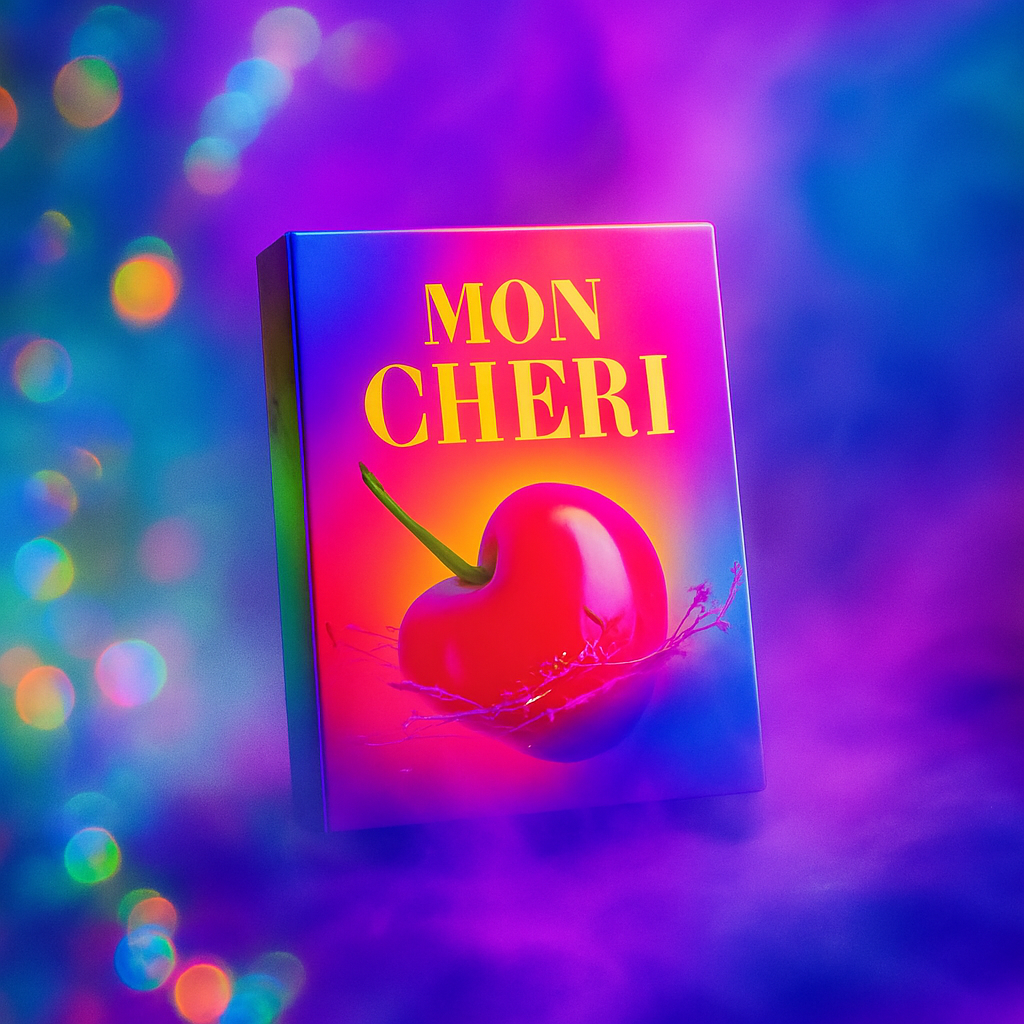
With crisps, things are still relatively simple: salt, paprika, sour cream – flavour preferences that are immediate, uncomplicated, and universally understood. But with Mon Chéri, we enter a different realm: here, it’s no longer just about taste, but about symbolism, ritual, and deliberate emotional impact.
There are things you can only truly understand once you’ve changed countries. Left-hand traffic. Mint sauce on lamb. And: the British obsession with Mon Chéri.
Yes, you read that right. That shiny red chocolate, usually found nestled between doilies and cough drops in German living rooms, enjoys near cult status in the UK.In Germany, Mon Chéri used to be an elegant gift – something you’d bring to your mother-in-law or grandma. These days, the brand feels a bit outdated. Retro, but not quite cool-retro.
In Britain, however, that cultural baggage doesn’t exist. There, Mon Chéri was never relegated to the dusty corner of 80s coffee tables – it simply remained what it always was: fancy chocolate with booze. Why? Simple: in the UK, Mon Chéri is considered sexy. Decadent. A little bit naughty. Even if the packaging looks like it was designed using a 90s clipart CD.
Mon Chéri represents the myth of Europe – like a holiday in a box. Balmy nights in Rome. Flirtations in France. A bit cliché, yes. But charming. The British bite into it and taste: exoticism. Passion. And a dash of “I don’t know what this is, but it pops quite nicely.”
In Germany, meanwhile, Mon Chéri mostly evokes memories of grandma’s sideboard or Aunt Gisela on the couch, watching the Sunday morning show on TV.
Naturally, I explained this to my British friends. I told them that, in Germany, Mon Chéri is about as cool as an adult education class in potholder crochet. We give it away when we want to show we made some effort – but not too much, please.
The Brits just smiled, held up the chocolate between two fingers like a tiny treasure and said:“You Germans have no idea what you’re missing.”
Maybe they’re right.
Maybe we’re just too sober for a chocolate that has more alcohol than our New Year’s punch.
And maybe it’s time we asked ourselves: Is Mon Chéri really outdated – or are we?
Living Space
Mapping the Feeling of Home
Architecture is the silent language that gives expression to our identity, longing and philosophy of life.
How you live mirrors your inner world.

Interior culture is not a style – it’s a self-image. It reveals how a country protects itself: from cold, from prying eyes, from the unpredictable. And sometimes, too, how it stands in its own way. Let’s enter the space between square metres and emotion.
When buying a house, you instantly realise: you’re in England. “It’s a lovely three-bedroom house!” the estate agent beams — and gestures proudly toward a door hiding a room that, in Germany, wouldn’t even qualify as a walk-in wardrobe.
In Germany, people take a more sober approach: square metres are what count. “How big is your flat?” — “92 square metres.” Efficient. Measurable. Reassuringly German. Follow-up questions typically include: “What’s the cold price per square metre?”
German flats follow logic. Kitchen, bathroom, living room, bedroom - in a layout that makes sense. And heaven forbid the hallway is larger than the bathroom: instant disqualification, like a doping case at the Olympics.
In England, however, it’s not the size of the living area that matters, but the number of bedrooms.“It’s a three-bedroom house!” Sounds impressive - until you realise those three “bedrooms” could collectively be smaller than a decent German kitchen-diner. English buyers ask: “Does it have original features?” Square metres? Largely irrelevant.
German flats are functional fortresses: efficient heating, sockets where you need them, windows aligned so the curtains fit like precision-cut suits. Everything planned, measured, DIN-certified. Practicality reigns.
English houses, by contrast, exude charm: creaky floorboards, slightly slanted walls, open fireplaces (rarely used - too draughty), and windows that stubbornly refuse to open or close properly. And then there’s the bathroom - often downstairs, tucked behind the kitchen, chilly and delightfully inconvenient.
In Germany? Unthinkable. The bathroom is sacred: underfloor heating, towel warmers, everything a temple of functionality.In the end, both styles have their charm:
In Germany, you live practically - in England, you live poetically in too little space.
The Architecture of emotional Safety

Before we enter the scene, we step into a question: What does safety look like – not as a concept, but as a lived-in space?
Our homes reflect our emotional blueprints – how soft-close drawers, cluttered corners, and kettle rituals reveal what we long for, what we protect, and what we’re willing to let in.
There are a few things Germany is famous for around the world: cars, punctuality and kitchens. Or as an English friend once sighed: “When I see a German kitchen, I feel safe.”
To the British, a German kitchen is more than just a room where meals are made. It’s a symbol. A place of longing. A high-tech fortress against the chaos of everyday life.
While the classic English kitchen often feels charmingly improvised (“The microwave’s on top of the washing machine, the coffee maker’s in the hallway, and the fridge? Just outside, next to the garden shed.”) a German kitchen is entered with something close to reverence. Like stepping into a temple of order.
Everything has its place. The oven sits at ergonomic height. The bin system has at least three compartments. Drawers close with the soft purr of a Rolls Royce. And the worktop? Built from a material that could survive World War III.
No surprise, then, that London property listings proudly boast: “Fitted with a genuine German kitchen!” Buyers react as if they’ve secured a private bunker in the Alps. Why the hype? Because the German kitchen embodies a rare blend of logic and utopia. Even if the world outside is collapsing, the coffee inside will still brew – precisely – at 92 degrees.
Of course, Germans themselves don’t quite understand the reverence. For them, a kitchen is just… a kitchen. Functional. Unemotional. A place to boil water, chop vegetables, and – ideally – not have to assemble the oven themselves. But in England, the kitchen has become a symbol of hope. Hope that there might be a life where drawers glide, countertops align, and the tap doesn’t get hot by running over the toaster.
For the English soul, the German kitchen is silent proof that somewhere, out there, a world exists in which everything works. And who knows - maybe one day, the English will even start letting Germans design their bathrooms.But that would probably be too much happiness all at once.
Mixer Taps and emotional Manuals
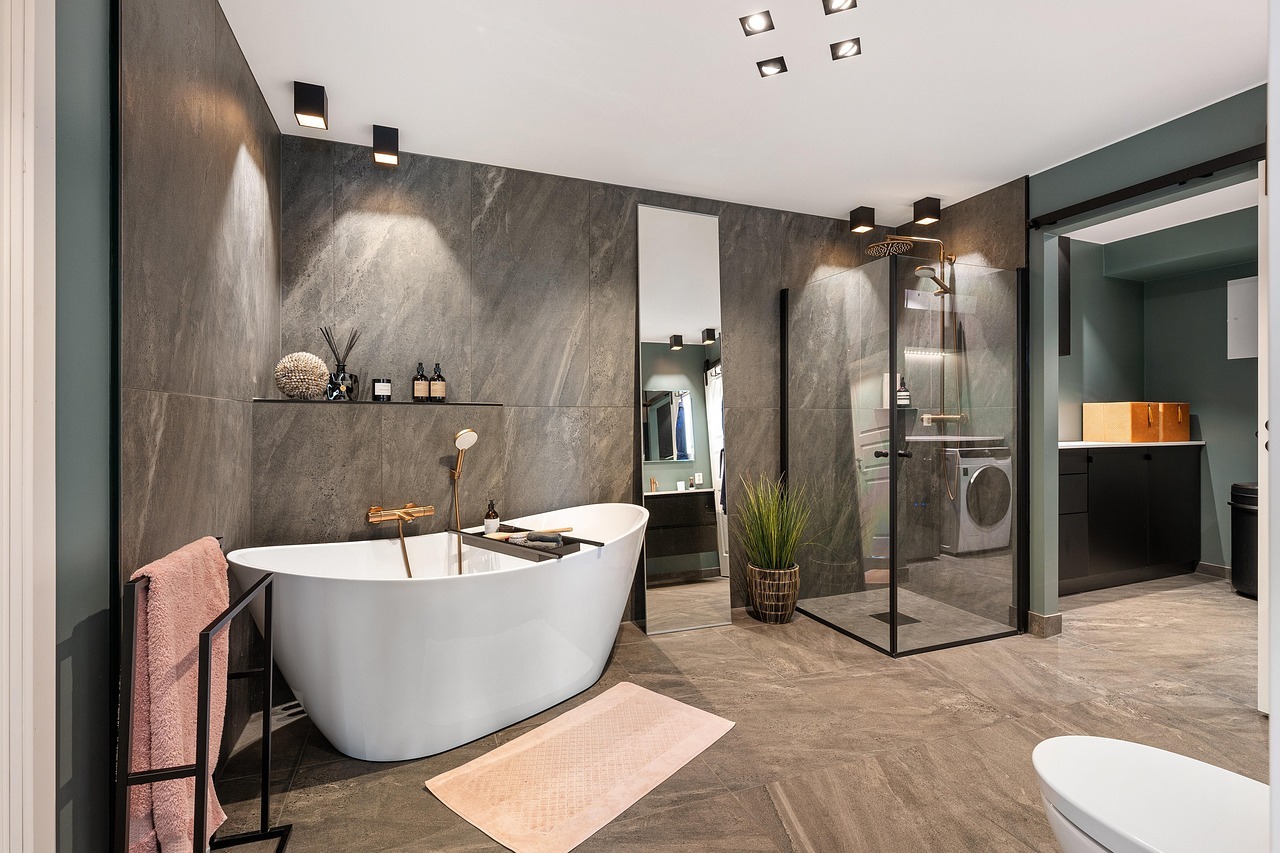
A bathroom can be a place of regeneration and control – or a space that teaches us to live with contradictions.
In Germany, the bathroom is a temple of functionality and dignity. One doesn’t simply bathe - one curates. The walk-in shower glides into the spatial concept like a Zen garden, the fittings gleam with the precision of surgical instruments, and the underfloor heating offers warmth that caresses not just the toes, but the sense of self-worth. The heated towel rail? A silent butler, warming the terry cloth to exactly 42 degrees - not too hot, not too tepid, but just right for the German pursuit of thermal justice.
And then… England. A country where the bathroom is often treated like a neglected utility cupboard - frequently carpeted. Yes, carpeted. A material that embraces moisture like the Queen did her corgis. The taps? Two separate spouts, forcing a binary choice: scald or freeze. Mixing temperature? A concept that seems to have exited with the EU. The shower drips like melancholic mist over Yorkshire, and the tiles - if present - hail from an era when Empire was still a mood.
While the German celebrates the bathroom as a site of regeneration and control, the Brit meets it with stoic indifference: “It’s just a bathroom, mate.”And so, one stands as a continental guest in a British B&B, barefoot on carpet, between two taps, wondering: Is this a test? A trial of my cultural resilience?
Perhaps the British bathroom is a metaphorical space. A place that teaches us to live with contradiction - with cold and heat, with damp and textile, with the understanding that comfort isn’t always a matter of engineering, but of attitude.
Still, let’s be honest: a bit of underfloor heating wouldn’t go amiss.
Climate Space
Sometimes climate is not weather, but a feeling: the way people dose closeness, how much clarity they can bear, and how a room dissolves tension.
How you make contact shapes the climate.
Degrees in the Air

Some cultures treat education like a high-pressure system: dense, stable, and meticulously charted. Others let it rise like thermal lift – buoyant, intuitive, shaped by experience. This scene explores how Germany and Britain navigate identity through degrees, titles, and the silent weather systems of belonging.
In Germany, a university degree isn’t just a milestone - it’s oxygen. Without it, your career prospects suffocate. The rule of thumb: the longer you study, the better. A Master’s? Sensible. A PhD? Why not two, just to be safe.
The classic scene: someone introduces themselves at a casual gathering and says, “Good morning, I’m Thomas Obermayer, Dipl.-Ing., M.Sc., certified Scrum Master and AI specialist.”
In Britain, it’s more likely: “Hi, I’m Tom.” A degree? Nice to have. But what really counts is wit, warmth, and a decent blazer. You can rise through charm, contacts, and competence.
In Germany, being a “motivated career changer” sounds promising, but it’s meteorologically risky. No degree? Good luck getting an interview. No interview? No job. High pressure.
In Britain, titles are often dropped on purpose. Call yourself “Doctor” and someone might ask if you do backs or bunions. To sum up education is more like thermal lift -buoyant, experiential, and open to improvisation.
And yes, the German model may be safer. But sometimes, I long for the British lightness—the freedom to simply be someone, without hearing “Please have your certificate officially validated” thirteen times first.
While the Brit reflects on their gap year in Bali over a round of golf, the German wonders whether the course is reserved for those who wrote their thesis on turf management.
Wind Patterns of Conversation

In Germany, dialogue tends to follow clear currents - structured, directional, with minimal turbulence. In Britain, conversation is more like a breeze: playful, unpredictable, and full of warm gusts. This scene explores what happens when two wind systems meet - one seeking clarity, the other chasing connection.
I used to think the British were the undisputed masters of politeness. In my mind: a gentle nod here, a murmured “sorry” there, tea in one hand, composure in the other. A mild breeze, never disruptive. Until I found myself in the middle of it.
The surprise? Brits interrupt – constantly. But not rudely. A British conversation is like a breezy spring day: full of sudden gusts, warm updrafts, and unexpected shifts in direction. People chime in, cheer each other on, nudge the dialogue forward. It’s like cricket: full of commentary, movement, and the occasional gentle sledge – but never a direct hit.
German conversations, by contrast, are more like a sudden crosswind: sharp, decisive, and directional. An interruption there often signals a change of course. One person speaks, the other listens. If someone cuts in, it’s usually to correct, clarify, or straighten a crooked frame of thought. An interruption is a structural intervention.
In Britain, it’s a sign of life. Where the German might glance at their watch after the third interruption, the Brit smiles and offers more tea. “Isn’t it lovely? The conversation’s alive!”In Britain, overlapping voices mean enthusiasm. Everyone talks at once, no one remembers the original point, but everyone feels fantastic. “Interruptions aren’t rude. Silence is.”
In Germany, if two people speak at the same time, the first step is to decide - formally - who has the floor. Then comes a brief reflection on conversational discipline. The goal is a clean landing, not a mid-air collision.As a British friend once told me, with a wink:“Interruptions are just our way of saying: We’re still awake – and we love you.”
Fog Zones and Frontal Systems

Cultures carry their own weather of emotion. Some dissolve tension in fog, others confront like a storm. What feels like politeness in one place may sound like avoidance in another. To read a culture, watch how it handles silence and endings – that’s where the real climate shows.
Manchester, Piccadilly Station, 08:17. Rush hour. I’m standing on the escalator. On the right: fast lane. On the left: standing lane. That’s the secret code of honour of British public transport. And of course – I’ve forgotten, or it wasn’t present to me at that moment. I stand on the right– just like in Germany. I’m blocking the fast lane.
A cough behind me. Then another one. A meaningful clearing of the throat. Nobody says anything. Of course they don’t. Instead, the tension condenses like fog. An elderly lady behind me begins to conspicuously remove her gloves. Everyone suffers in silence, as if caught in a low‑pressure zone.
In Germany, the weather system would have shifted quickly: a sharp gust of “Excuse me, can I go through?” – a frontal attack, direct and clear.
In England? Silent suffering. But in style, with elegance.I learnt that the biggest challenge in Manchester is not the left‑hand traffic, but the emotional slalom around embarrassment. Awkwardness here is treated like a sudden storm front: sweaty palms, flight reflex, internal overload. Social earthquakes break through like unexpected hail, bringing feelings and insecurities to the surface. It’s like losing your trousers in the middle of the pub – absolute loss of control. The Englishman avoids any form of social awkwardness as carefully as one avoids icy roads. Feelings? Better not. Physical contact? Only if someone dies on the zebra crossing. Emotional honesty? Maybe after five Guinness. Perhaps.
For good reason the Brits master the art of trivial conversation like a samurai masters his sword – or like a reliable umbrella against drizzle. “Lovely weather, isn’t it?” works in every situation. If an awkward moment breaks through this protective shield, suddenly they are standing there naked, metaphorically speaking, exposed to the storm, and they really have to talk. Horror! They would rather apologise for existing than put someone in an awkward situation. An awkward situation triggers a tsunami of apologies, because nobody knows what they are actually apologising for – they just do it on principle. And then again for good measure, as if layering sandbags against rising water.
I sometimes wonder how an English person would survive a German family celebration. Twelve people in the kitchen, one crying, two discussing capitalism at the top of their voices, and Grandma bringing up the funeral at some point. A German gathering is a thunderstorm of emotions, a frontal system of confrontation. An Englishman would flee backwards out of the window. Quietly. And apologise for it.
And me? I’m still practicing – navigating fog zones and frontal systems, learning to read the weather of embarrassment.
Sound Space
Emotion can be played like music. Keys and rhythms touch each other. Harmony and dissonance lie close together.
How you encounter others shapes the sound.
Degrees in the Air

Friendship is not unison, but an arrangement. Some play by the notes, others by feel. Yet when both listen, something third emerges: a shared sound that carries – even when it turns dissonant.
Some people build their relationships like a sonata – with clear themes, set entries, and the expectation that harmony will last as long as everyone sticks to the score.
Silke is one of those people. She lives her friendships by the sheet music: with structure, repetition marks, and a steady tempo. For her, closeness is chamber music – rehearsed regularly, finely tuned, reliably in time. Birthdays, invitations, small gestures – all carefully composed, not a note left to chance.
Henry, on the other hand, plays relationships like jazz. Spontaneous, unpredictable, sometimes brilliant – sometimes just off‑key. He thrives on improvisation, not notation. Melodies appear when they want, vanish before you can hold them. He rings at impossible hours, saying things like: “Thought of you three weeks ago – only just got round to it, but it’s honest.” Consistency isn’t his rhythm, but freedom is.
And yet – they’ve been friends for over ten years. How? Perhaps because Silke never expected Henry to reply on time. And Henry eventually understood that Silke doesn’t ask if he’s free – she simply turns up when it matters.
Last autumn, after his fifth break‑up in three years, Henry called. “I think I’m incapable of relationships,” he said. Silke didn’t answer straight away. She finished her coffee first. Then she said: “Maybe. But you’re perfectly capable of friendship. That counts.”
Henry was quiet – rare for a Brit. Then he said: “You’re like… my German constant.” And Silke, who is never sentimental, replied: “You’re my lovable uncertainty.”
Friendship sometimes means enduring that the other ticks differently. That one builds for the long term – while the other barely knows what’s for dinner tomorrow. True friendship doesn’t need perfect harmony. Only trust: that even a restless heart can beat reliably, if you let it.
String Quartet in Dialogue with a Piano
Emotion can be played like music: sometimes with the clarity of a piano, precise and deliberate; sometimes with the subtlety of a quartet, suggestive and rich in silence. From both we learn: “I’m fine” can resound louder than despair, and silence is not always avoidance, but an invitation.
You can stumble over many things: a kerb, a misplaced charging cable, your own feet. But nothing unsettles people quite as reliably as a good, honest emotion – especially across cultures. Or, as I call it: the emotional Grand Canyon between England and Germany.
Germany plays emotion like a piano – precise, deep, deliberate. Feelings must come out, and thoroughly: disappointment, anger, shame – all named, felt, reflected. Talking is care. Conversation is therapy. To love is to talk – deeply, sometimes uncomfortably, but always sincerely. “I’m at the end of my strength” is not weakness, but part of self‑optimisation. Emotional interiors are constantly renovated: windows open, truth in. “I don’t feel seen” is not accusation, but inventory – a call for attention.
England plays emotion like a string quartet – subtle, suggestive, rich in silence. Showing feelings is about as popular as sneezing loudly at the opera. It is considered civilised to disguise the inner life politely – with tea, small talk, and the occasional “It’s been a bit much lately.” Translation: “I’m having a meltdown, but I don’t want you to feel awkward. I lie awake at night questioning my entire existence, but I won’t mention it, because you might get sad too – and that would be inconvenient. So I’ll function by day like a polite robot.”
What Germans call authenticity, the English might call oversharing. And I’ve learned that “I’m fine” doesn’t always mean “I’m fine.” Sometimes it means: “Don’t ask – I’m a walking volcano.” Not everyone talks to solve. Some stay silent to protect. And some need five days, a walk in the woods, and a pint of Guinness before they finally say: “You know… that thing you said… it kind of stayed with me.”
That is British for “Let’s talk.” Just quieter. With more undertones. And here begins the mystery: how do you reach someone whose emotional firewall is built from irony, politeness, and “I’m fine”?
Two Endings. Two Tempi.
Every culture composes its own tempo for goodbye. Some prefer the silent rest – a fade‑out that spares dissonance. Others insist on the full score – a finale with themes, counterpoint, and emotional notation.
Henry doesn’t vanish abruptly. He evaporates, like a diminuendo fading into silence – Earl Grey left too long to steep, or a thought you almost had. It begins innocently: a few days of quiet. Then a soft motif: “Been travelling a lot.” Then nothing. His messages shorten like clipped notes: “Sounds good.” – “Let’s see.” – “Busy week.” Until the score falls silent.
Martina, by contrast, prepares a full orchestral finale. She drafts a relationship talk with structure, phrasing, bullet points, and an opening theme of appreciation. In Germany, you don’t end with rests – you end with a coda. Break‑ups are played in complete sentences, with emotional counterpoint and detailed notation.
Henry is already on his way to Mallorca. On Instagram, only stray refrains remain: “Growth begins where comfort ends.” He hasn’t broken up; he has bowed out without disturbing. He has deleted the chats, archived the photos, and quietly removed himself from the story – like a discreet editor striking out only the footnotes from the score.
Martina still writes an email: “Just a small question – was that the end, or only a phase?” She attaches a PDF. Twelve pages. Title: “Relationship Dynamics in Retrospect – An Intersubjective Analysis.”
Henry sees the mail. Reads the first bars. Orders a Flat White and thinks: “We never really defined the piece, did we?"